
Credit card annual fee in brief: Annual fees on credit cards range from ₹500 to ₹10,000+ for premium cards.
Annual fees on credit cards range from ₹500 to ₹10,000+ for premium cards. However, most cardholders can get these fees waived with the right approach. Banks would rather retain an active customer than lose them over a fee, and knowing how to negotiate gives you significant leverage.
Cards with Lifetime Free or Easy Waivers
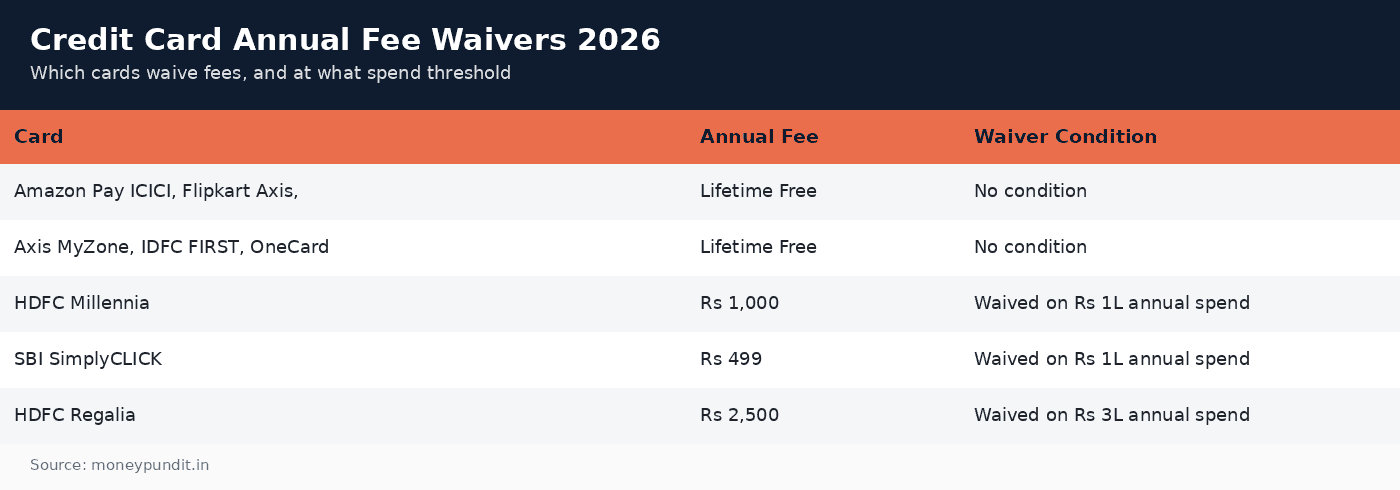
Several excellent cards come with no annual fee ever: Amazon Pay ICICI, Flipkart Axis Bank, Axis MyZone, IDFC FIRST Classic, and OneCard. Other cards waive fees based on annual spending thresholds, HDFC Millennia waives ₹1,000 on ₹1 lakh spend, SBI SimplyCLICK waives ₹499 on ₹1 lakh spend, and HDFC Regalia waives ₹2,500 on ₹3 lakh spend. Before applying, know the waiver threshold and ensure it aligns with your natural spending.
How to Request Fee Waiver
Call customer care when the annual fee appears on your statement. Politely explain that you are considering closing the card due to the fee. The first agent often cannot waive the fee, ask to speak with the retention department. Mention your spending volume and relationship tenure with the bank. If they offer a partial waiver, hold firm for a full waiver. If they refuse, mention that you have a competing offer from another bank. Most banks will offer a full waiver, reward points equivalent to the fee, or a discounted rate.
The Retention Department Strategy
Banks invest ₹3,000-₹8,000 to acquire each credit card customer. Losing you costs them more than waiving a fee. The retention team has authority to offer fee waivers, bonus reward points, credit limit increases, or even card upgrades. Be prepared to actually close the card if they refuse. This demonstrates genuine intent. Many users report receiving better offers after formally requesting card closure than from initial fee waiver requests.
When Paying the Fee Makes Sense
For premium cards like HDFC Infinia (₹10,000 fee), Axis Atlas (₹5,000), or Amex Platinum (₹60,000), the benefits often far exceed the fee. Calculate: annual rewards earned + lounge access value + milestone bonuses + insurance coverage – annual fee = net value. If net value is positive and substantial, the fee is a worthwhile investment. Some ultra-premium cards do not waive fees at all, and the fee itself acts as a filter for serious users.
What if the bank refuses to waive?
If genuine negotiation fails, evaluate whether the card benefits justify the fee. If not, close the card and switch to a fee-free alternative. But always have a replacement card ready before closing, and never close your oldest credit card as it impacts your credit history length.
Can fee waiver affect my credit score?
Fee waivers have no impact on your credit score. However, closing a card (especially your oldest one) can affect your score by reducing available credit and shortening average account age.
How Credit Card Annual Fee Waivers Work
Most premium credit cards charge annual fees ranging from ₹500 for basic cards to ₹10,000+ for super-premium offerings like HDFC Infinia (₹12,500) or Amex Platinum (₹60,000). However, these fees are almost always negotiable or avoidable through spend-based waivers, retention offers, or strategic card selection. The key is understanding that banks profit primarily from merchant transaction fees (2-3% of each swipe) and interest charges. Annual fees are secondary revenue that banks will often waive to retain active cardholders.
Most cards with annual fees of ₹500-₹5,000 offer automatic fee waiver on meeting a minimum annual spend threshold, typically ₹1-₹3 lakh for mid-range cards. For example, HDFC Regalia waives its ₹2,500 fee on ₹3 lakh annual spend, and Axis Flipkart Card waives ₹500 on ₹2 lakh spend. Before choosing a card, calculate whether your natural spending meets the waiver threshold without forcing unnecessary purchases.
Negotiation Tactics That Work
If your card’s annual fee posts to your statement, call the bank’s customer service and request a waiver or reversal. Banks approve waiver requests more often than you’d expect, especially for customers with good payment history and regular card usage. If the first agent refuses, ask to be transferred to the retention department, which has more authority to offer fee waivers, bonus reward points, or reduced fees.
The most effective approach: mention that you’re considering cancelling the card due to the fee. Banks invest ₹1,500-₹3,000 in customer acquisition, so retaining you at the cost of waiving a ₹2,000 fee is better economics for them. If the waiver is declined, negotiate alternatives, many banks offer equivalent or higher reward points as “annual fee compensation.” For instance, if your ₹3,000 annual fee gets you 3,000 bonus reward points worth ₹750-₹1,000, it partially offsets the cost.
Cards with No Annual Fee (or Lifetime Free)
Several excellent credit cards charge zero annual fee permanently: Amazon Pay ICICI Card (up to 5% cashback on Amazon, 1-2% elsewhere), IDFC First Select (6x reward points on specific categories, no annual fee), Flipkart Axis Card (5% cashback on Flipkart, lifetime free after one-time activation), and AU Small Finance Bank credit cards (competitive rewards with zero annual fee). These “lifetime free” cards are ideal for people who want rewards without tracking spend thresholds or calling for fee waivers.
A smart strategy is maintaining one lifetime-free card as your everyday card and one premium fee-waived card for specific benefits (lounge access, higher reward rates). This combination maximises rewards while minimising costs. Track all your credit card rewards and fees to ensure you’re always net positive. The rewards earned should comfortably exceed any fees paid. Maintain a strong CIBIL score (750+) to qualify for the best card offers and fee waiver approvals, and never carry forward a balance just to maintain spending thresholds, the interest charges would far outweigh any fee savings.
A fee-waiver clause only helps if you actually track your spend threshold. Set a reminder a month before the anniversary date so the waiver doesn’t quietly lapse.
References: Sebi.gov.in
Source: sebi.gov.in
Compare: credit card charges India 2026: interest rates and late fees by bank to see which fees you may be able to avoid.
Compare: forex markup India 2026: credit card and forex card charges compared for cards that cost nothing on foreign spends.
Frequently Asked Questions About Credit card annual fee
How do I get my credit card annual fee waived?
Call customer care when the annual fee appears on your statement, say you are considering closing the card, and ask for a waiver or reversal. The retention team can often approve it.
Why do banks agree to waive credit card annual fees?
Banks spend roughly ₹3,000 to ₹8,000 to acquire each credit card customer, so losing you costs them more than waiving a fee.
Which credit cards have no annual fee?
Several cards charge no annual fee, including Amazon Pay ICICI, Flipkart Axis Bank, Axis MyZone and IDFC FIRST Classic. Check each bank for current terms.
When is it worth paying a credit card annual fee?
For premium cards such as HDFC Infinia (₹10,000), Axis Atlas (₹5,000) or Amex Platinum (₹60,000), the benefits can far exceed the fee if you use them regularly.
Credit card annual fee: Key Takeaways
Key points on credit card annual fee:
- Several excellent cards come with no annual fee ever: Amazon Pay ICICI, Flipkart Axis Bank, Axis MyZone, IDFC FIRST Classic, and OneCard.
- Call customer care when the annual fee appears on your statement.
- Banks invest ₹3,000-₹8,000 to acquire each credit card customer.
Verify the latest credit card annual fee figures with RBI before you act.