
Travel insurance international trips in brief: Minimum medical coverage should be $50,000-$100,000 for Asian destinations and $250,000-$500,000 for US, UK, and Europe (where medical costs are significantly higher).
Travel insurance is essential for international trips, protecting you against medical emergencies abroad, trip cancellations, lost baggage, and other travel disruptions. With overseas medical treatment potentially costing lakhs of rupees, even a single emergency can justify years of travel insurance premiums.
Travel Insurance For International Trips: What Travel Insurance Covers
Emergency medical expenses including hospitalization, surgery, and doctor visits abroad form the core coverage. Medical evacuation covers the cost of transporting you to the nearest adequate medical facility or back to India. Trip cancellation reimburses non-refundable booking costs if your trip is cancelled due to covered reasons (illness, natural disaster, visa rejection). Baggage loss or delay compensation covers essential purchases and luggage replacement. Flight delay benefits provide meals and accommodation for extended delays. Personal liability covers legal costs if you accidentally injure someone or damage property abroad.
How to Choose the Right Plan
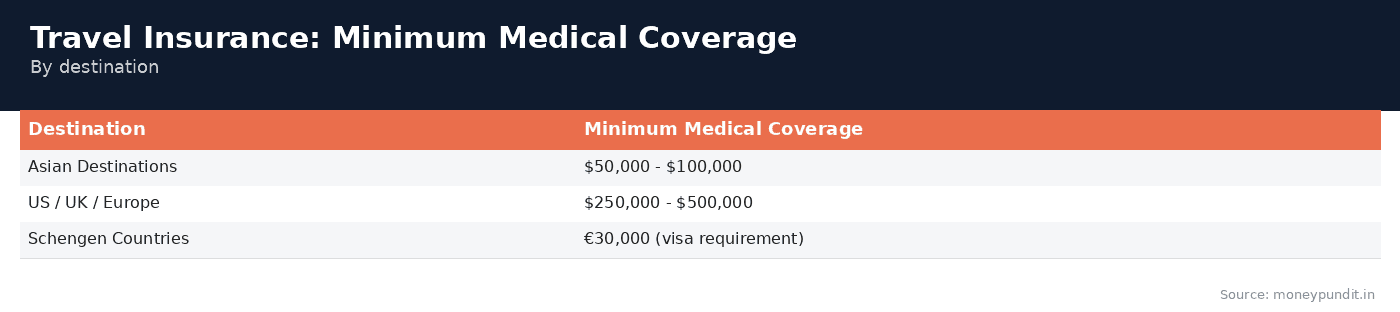
Minimum medical coverage should be $50,000-$100,000 for Asian destinations and $250,000-$500,000 for US, UK, and Europe (where medical costs are significantly higher). Schengen visa countries require minimum €30,000 medical coverage as a visa requirement. Check whether the plan covers COVID-related claims, adventure sports, and pre-existing conditions. Verify the list of network hospitals in your destination country for cashless treatment availability.
Top Travel Insurance Plans
Bajaj Allianz Travel Guard offers comprehensive coverage with competitive premiums and wide network. ICICI Lombard Travel Insurance provides flexible plans for leisure, business, and student travelers. HDFC ERGO Travel Insurance includes coverage for adventure activities and is Schengen compliant. Tata AIG Travel Insurance offers specific plans for senior citizens and families. Care Health Travel Insurance provides dedicated student travel plans with extended coverage for study abroad.
When to Buy and Common Exclusions
Buy travel insurance at least 1-2 weeks before departure to activate trip cancellation benefits. Some credit cards include travel insurance, check if the coverage is adequate before buying separately. Common exclusions include pre-existing conditions (unless specifically covered), injuries from extreme sports not declared beforehand, travel against medical advice, claims arising from alcohol or drug use, and travel to war zones or sanctioned countries.
Is travel insurance mandatory for international travel?
It is mandatory for Schengen visa applications and some other countries. Even where not required, it is strongly recommended. A single medical emergency in the US can cost ₹50 lakh or more without insurance.
Does travel insurance cover flight cancellations by airlines?
Most policies cover trip delays but airline cancellations are typically handled by the airline’s own policies. Travel insurance covers your additional costs (meals, accommodation) during extended delays and non-refundable bookings lost due to covered cancellation reasons.
Why Travel Insurance Is Non-Negotiable
Medical treatment abroad can cost a fortune: a simple hospital visit in the US can set you back $2,000-$5,000, while a major surgery or ICU stay can exceed $100,000 (roughly ₹85 lakh). Without travel insurance, you’re personally liable for the full amount. Travel insurance for international trips typically costs ₹500-₹2,000 for a week-long trip but covers medical emergencies up to $50,000-$500,000, making it one of the best risk-reward investments for any traveller.
Beyond medical coverage, comprehensive travel insurance protects against trip cancellation (reimbursing non-refundable bookings), lost or delayed baggage (compensation for essentials), flight delays (hotel and meal expenses), passport loss (emergency assistance and replacement costs), and personal liability (if you accidentally damage property or injure someone abroad). Many Schengen countries and nations like Australia, UAE, and Thailand now require proof of travel insurance for visa approval.
Choosing the Right Coverage
The ideal coverage amount depends on your destination. For the US, Canada, and Europe, opt for a minimum of $100,000 medical cover due to high healthcare costs. For Southeast Asia or neighbouring countries, $50,000 may suffice. Always check whether the policy covers COVID-related hospitalisation, adventure sports, and pre-existing medical conditions. These are common exclusions in basic plans.
Compare policies on three critical parameters: the sum insured, the deductible (the amount you pay before insurance kicks in, lower is better), and the claim settlement ratio of the insurer. Companies like ICICI Lombard, Bajaj Allianz, TATA AIG, and HDFC Ergo are among the top travel insurance providers in India with cashless hospital networks abroad. Prefer policies with 24/7 emergency assistance helplines that offer support in your language.
Common Mistakes to Avoid
Don’t buy insurance after starting your trip: most policies must be purchased before departure to be valid. Avoid choosing the cheapest plan without reading exclusions; dental emergencies, mental health treatment, and injuries from alcohol use are commonly excluded. Keep all receipts and medical documents during your trip for smooth claim processing.
If you travel frequently, consider an annual multi-trip policy instead of buying individual trip coverage each time, it’s more economical for 3+ trips per year and typically costs ₹3,000-₹8,000 annually. Families should look for family floater travel insurance plans that cover all members under a single policy at a reduced premium. Pair your travel insurance with a travel credit card that offers complementary cover for additional protection layers.
References: Sebi.gov.in
Source: sebi.gov.in
Travel insurance international trips: Key Takeaways
Key points on travel insurance international trips:
- Emergency medical expenses including hospitalization, surgery, and doctor visits abroad form the core coverage.
- Schengen visa countries require minimum €30,000 medical coverage as a visa requirement.
- Bajaj Allianz Travel Guard offers comprehensive coverage with competitive premiums and wide network.
Verify the latest travel insurance international trips figures with IRDAI before you act.
Related guides: Insurance Guide, Family Floater vs Individual Health Insurance, Income Tax Calculator FY 2026.