

Credit card vs debit in brief: A credit card lets you borrow money from the bank for each purchase, giving you a 20-50 day interest-free period before the bill is due.
A debit card only ever spends money you already have; a credit card lets you spend the bank’s money and pay it back later, a small difference on paper that changes almost everything about rewards, fraud protection, and building a credit history. Here’s when each one actually makes sense.
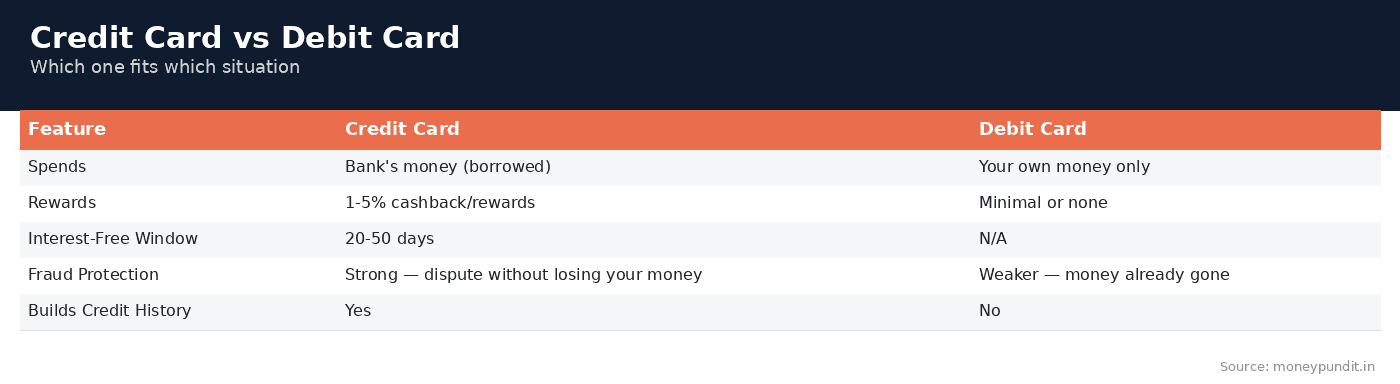
The credit card versus debit card debate is one of the most common personal finance questions in India. While both look similar and work at the same terminals, they have fundamentally different mechanics, benefits, and risks that make each better suited for specific situations.
How They Work Differently
A debit card draws money directly from your bank account for each transaction, you can only spend what you have. A credit card lets you borrow money from the bank for each purchase, giving you a 20-50 day interest-free period before the bill is due. This fundamental difference creates distinct advantages and risks for each.
Why Credit Cards Are Better for Spending
Credit cards offer 1-5% rewards or cashback on every purchase, essentially giving you a discount on all spending. They provide stronger fraud protection, unauthorized charges can be disputed without losing your own money. Insurance benefits cover purchases, travel, and accidents. The interest-free period lets your money earn returns in a savings account or liquid fund for 20-50 extra days. Credit cards build credit history that helps with future loan approvals at better rates.
When Debit Cards Are the Safer Choice
If you struggle with spending discipline, debit cards enforce a natural limit, your bank balance. For ATM cash withdrawals, debit cards are free at your bank’s ATMs while credit card cash advances attract 2.5-3.5% fees plus daily interest. For budgeting simplicity, debit card spending directly reduces your account balance, making tracking effortless. Young adults building financial habits may benefit from debit card discipline before transitioning to credit cards.
The Smart Strategy: Use Both
Route all regular spending (groceries, fuel, dining, bills, shopping) through your credit card to earn rewards and extend your interest-free period. Use your debit card only for ATM withdrawals and at merchants that do not accept credit cards or charge extra for them. Set up auto-pay to clear the full credit card bill from your bank account every month. This approach maximizes rewards while maintaining spending discipline, you never spend more than you would with a debit card.
Do credit cards charge annual fees?
Many entry-level credit cards are free for life or waive fees based on annual spending thresholds. Premium cards charge ₹500-₹10,000+ annually but the benefits typically exceed the fee for active users.
Can credit cards lead to debt traps?
Yes, paying only the minimum amount due (typically 5% of the outstanding) incurs 36-42% annual interest on the remaining balance. Always pay the full amount. If you cannot afford to pay the full bill, you are spending beyond your means.
Key Differences Between Credit and Debit Cards
The fundamental distinction is simple: a debit card spends your own money from your bank account, while a credit card borrows money from the bank that you repay later. This single difference creates a cascade of implications for rewards, protection, credit building, and financial risk. Understanding these differences helps you use each card strategically to maximise benefits while minimising costs.
Credit cards offer an interest-free period of 20-50 days between purchase and payment due date, essentially giving you a short-term free loan. This float can be valuable. If you invest ₹50,000 in a liquid fund instead of paying upfront, even 20 days of float earns you roughly ₹150-200 in returns. Over a year with consistent usage, this float benefit adds up. Debit cards debit your account instantly, offering no such benefit.
Rewards, Protection, and Credit Building
Credit cards significantly outperform debit cards on rewards. Most credit cards offer 1%-5% cashback or reward points on purchases, while debit card rewards are minimal or non-existent. On annual spending of ₹5 lakh, a good credit card can return ₹10,000-₹25,000 in rewards. Essentially free money for purchases you’d make anyway.
Credit cards also provide stronger fraud protection. Under RBI guidelines, if your credit card is used fraudulently and you report it within 3 days, your maximum liability is zero. While similar protections exist for debit cards, the key difference is that fraudulent credit card charges don’t affect your bank balance during investigation. The bank’s money is at risk, not yours. With debit card fraud, your actual savings are depleted until the bank reverses the transaction, which can take 7-90 days.
Perhaps most importantly, responsible credit card usage builds your CIBIL score. Every on-time payment strengthens your credit history, making it easier to get home loans, car loans, and better credit card offers in the future. Debit card usage doesn’t appear on your credit report at all.
When to Use Each Card
Use credit cards for online shopping (better fraud protection and rewards), travel bookings (complimentary insurance and lounge access), large purchases (EMI conversion option), and all regular spending where you can pay the full bill monthly. Use debit cards for ATM cash withdrawals (credit card cash advances charge 2.5%-3.5% fee plus 36%-42% interest from day one), small local purchases where you might overspend, and when a merchant charges extra for credit card payments.
The golden rule: never carry a credit card balance. If you can’t pay the full statement amount each month, you’re better off using a debit card until you stabilise your finances. Credit card interest at 36%-42% annually is among the most expensive debt available and can quickly spiral into a debt trap. Use our Personal Loan EMI Calculator to explore cheaper debt consolidation options if you’re already carrying credit card debt.
References: Rbi.org.in
Source: rbi.org.in
Compare: debit card charges India 2026: annual fees, ATM fees and minimum balance penalties by bank to see what each bank charges for the card.
Credit card vs debit: Key Takeaways
Key points on credit card vs debit:
- A debit card draws money directly from your bank account for each transaction, you can only spend what you have.
- Credit cards offer 1-5% rewards or cashback on every purchase, essentially giving you a discount on all spending.
- If you struggle with spending discipline, debit cards enforce a natural limit, your bank balance.
Verify the latest credit card vs debit figures with RBI before you act.